When it comes to increasing engagement on LinkedIn, the newsletter feature is a great way to do that. Not only does it give you the opportunity to demonstrate your industry knowledge, but it's also another piece of content that you can share both on and off LinkedIn for people to follow. LinkedIn members can subscribe to your newsletter and receive notifications whenever you publish a new article.
So how do you create a newsletter on LinkedIn?
Click "write article" at the top of your LinkedIn home page.
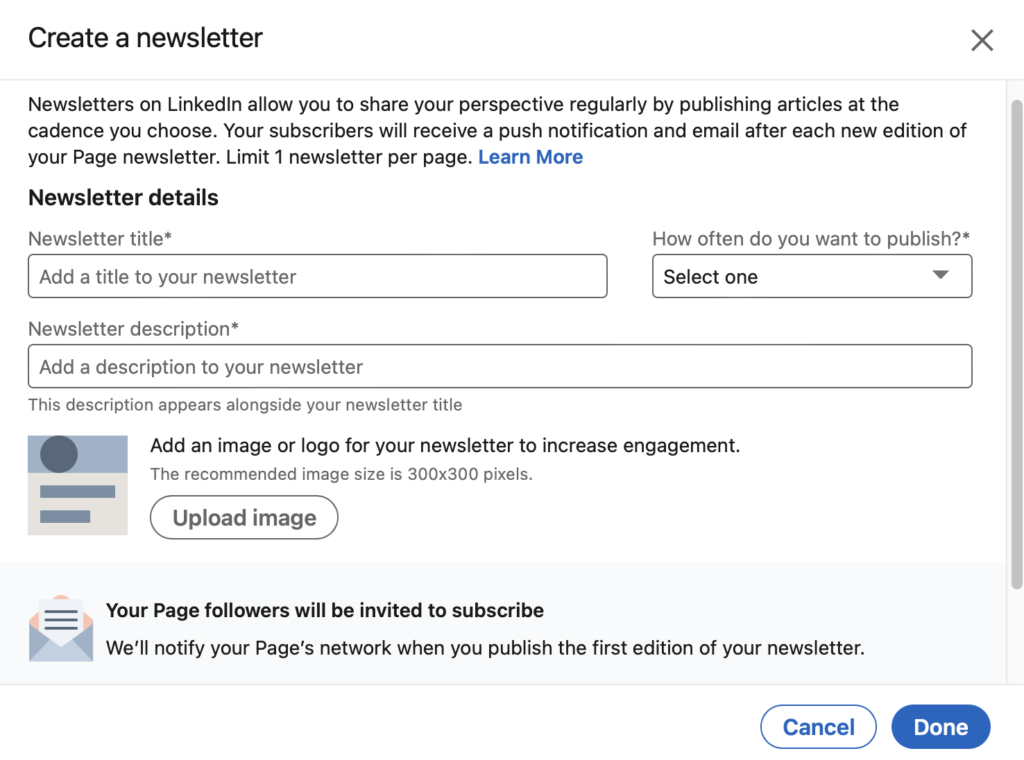
Click "create a newsletter."

Add a title, description and logo, and a time interval and then click 'publish'.
Now you have a newsletter on LinkedIn. Sounds easy enough, right? And that's because it is! Like many of the tools LinkedIn offers, once you know how to get started, anyone can use them to increase their engagement. The real work begins with creating unique and engaging articles that will keep your audience coming back for more.
When you are satisfied with the layout and design of your newsletter, you are ready to publish your first article. It's worth keeping in mind that the newsletter will be the place where your audience will look for updates on whatever topic you've chosen. So it's worth making sure that the topic you choose isn't just one you know a lot about, but one you're passionate enough about to create consistent content for.
After the first article is published, a page will be created for your newsletter with an overview, information about your LinkedIn profile and a list of your published articles.
By default, your contacts and followers will be automatically invited to subscribe to your newsletter through notifications.
Now you know everything you need to create on the portal. However, even if you're brimming with ideas, you may want to publish articles only every 24 hours so that your audience has adequate time to engage with one before you publish another. You don't have to publish articles every day, but consistently publishing them at the same time will ensure that your audience knows when to expect a new article and is more likely to engage with it.